Naval Ships and Operating Systems

Source: U.S. Air Force


FI INSIGHT: DEFENSE POLICY BILL SIGNED AS SENATE WORKS ON MINIBUS APPROPRIATIONS PACKAGE
Thursday, December 18, 2025

Source: U.S. Air Force


SANDY HOOK, Conn. - President Trump signed the FY26 National Defense Authorization Act (NDAA) into law Thursday, finalizing the year-long process for the defense policy bill. The House approved the bill last week in a 312-112 vote, and the Senate passed the NDAA Wednesday by a vote of 77-20. The legislation sets the national security topline at $900.6 billion, an $8 billion increase over the president's request. The Pentagon's portion of the total is $855.7 billion in the bill, which marks a $7.5 billion increase over the administration’s initial request of $848.2 billion.

The NDAA reflects a decisive pivot toward modernization. Lawmakers added a total of $12.7 billion specifically for developing and acquiring new military equipment. Consequently, procurement funding rose to $161.7 billion ($8.9 billion over the request), and research and development climbed to $145.7 billion ($3.7 billion over the request). These plus-ups were partially funded by offsetting cuts: $4.1 billion was removed from the Operation & Maintenance budget, and personnel funding saw a $1.5 billion reduction.

The bill supports ongoing defense acquisition reform efforts. A notable development is the establishment of a new Portfolio Acquisition Executive (PAE) role, which aims to shift the weapons buying process from a program-based model to a portfolio-centric approach. The new model is intended to provide acquisition executives with increased oversight and authority to manage groups of capabilities, rather than isolated projects. The legislation also includes multiple provisions intended to increase the number of commercial solutions adopted by the Pentagon, mirroring a push by the administration to prioritize the use of commercial options over bespoke capabilities that often take longer to develop cost significantly more.

Finalizing the NDAA doesn't complete the Pentagon's FY26 budget cycle. Congressional appropriators must next finalize a defense appropriations bill, which provides the final allocation of funds for the military for the remainder of the fiscal year. Most of the government is currently operating under a continuing resolution through January. With a holiday recess approaching, Congress has only weeks to conclude work on the FY26 spending bills to avoid another shutdown. While the House been focused largely on healthcare matters, the driver of October's initial shutdown, the Senate is drafting a minibus appropriations package that includes the Pentagon's budget. If lawmakers can align on the minibus, the military could avoid the disruptions of a full-year CR or another partial government shutdown.

The House has been largely focused on healthcare matters that led to the initial shutdown in October, but the Senate is working on a minibus appropriations bill that includes the Pentagon's budget. If lawmakers can make progress on the minibus bill, then the military could be spared from further disruptions caused by another CR or partial government shutdown.

Source: Forecast International
Associated URL: https://www.forecastinternational.com
Author: s. McDougall, Defense Analyst 
 

Source: BAE Systems


BAE SYSTEMS AWARDED $36M TO EQUIP U.S. SUBS WITH MULTIFUNCTION MODULAR MASTS
Monday, December 8, 2025

Source: BAE Systems


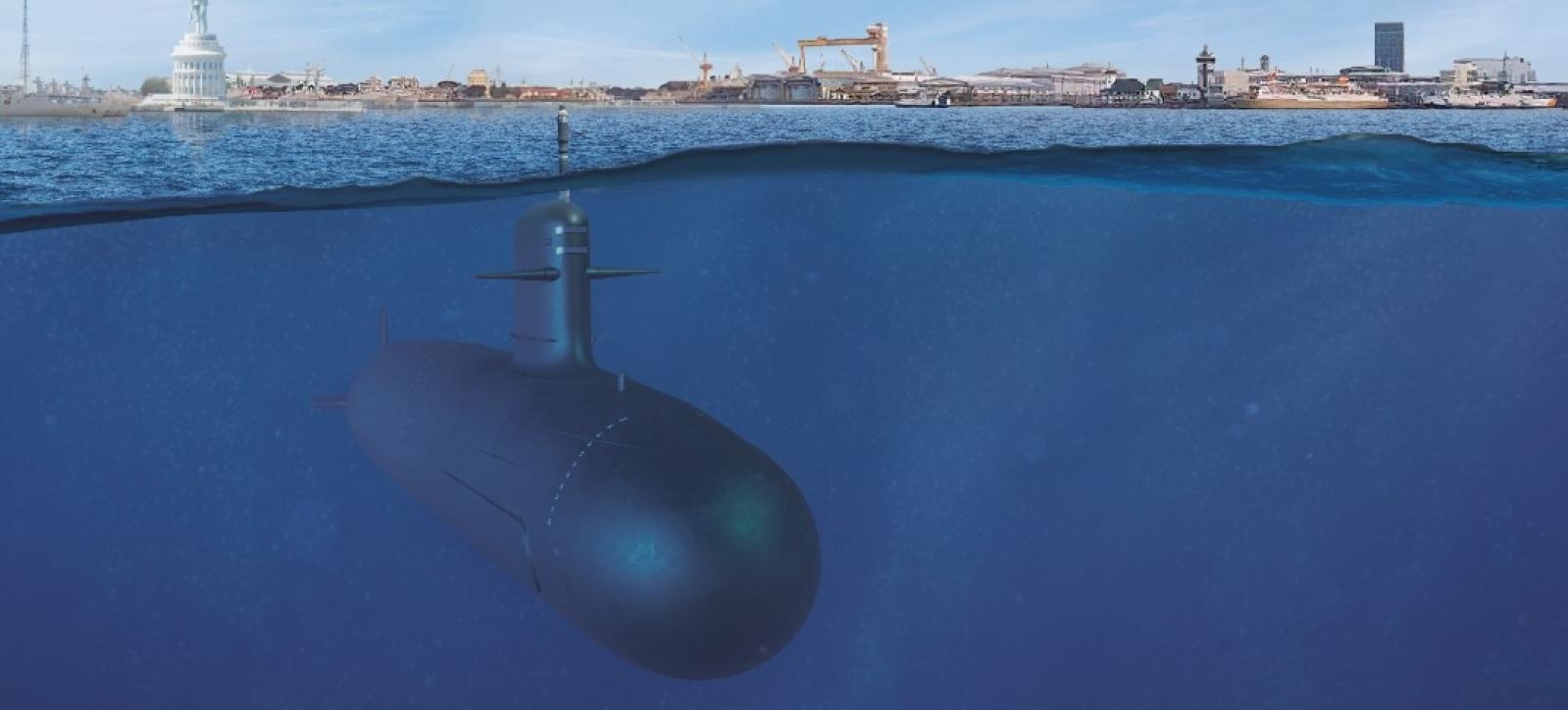
WASHINGTON -- On December 8, 2025, BAE Systems announced that it had been awarded a $36 million production contract from Lockheed Martin to deliver Multifunction Modular Mast (MMM) systems for integration onto U.S. Navy submarines.

The MMM system is a radio frequency receiving antenna that provides U.S. Navy submarines the ability to detect, identify, and direction-find adversary communications signals before rising to the surface. The antennas will mount on new Virginia-class submarines and feed into Lockheed Martin’s AN/BLQ-10 electronic warfare (EW) system.

The tactical communications receiving antenna resides in a composite radome. Its pressure-rated and corrosion-resistant design allows the unit to survive the harsh undersea environment and maximize signal-gathering performance while minimizing visibility of the mast and platform. The system also includes a payload module that enables the U.S. Navy to incorporate additional sensors for other mission applications.

According to Michael Rottman, Program Area Director for Maritime Sensors and Systems at BAE Systems, "The Multifunction Modular Mast system equips U.S. Navy submarines with critical capabilities to locate and identify potential threats, enabling them to analyze and respond accordingly."

 
Northrop Grumman's successful test of the Mk 72 motor

Northrop Grumman's successful test of the Mk 72 motor

Source: Northrop Grumman


FI INSIGHT: NORTHROP GRUMMAN ADVANCES NAVAL DEFENSE WITH SUCCESSFUL MK 72 SOLID ROCKET MOTOR TEST
Thursday, December 18, 2025
Northrop Grumman's successful test of the Mk 72 motor

Northrop Grumman's successful test of the Mk 72 motor

Source: Northrop Grumman


SANDY HOOK, Conn - On December 18, 2025 Northrop Grumman successfully conducted a static fire test of its prototype Mk 72 solid rocket motor at the company’s advanced propulsion facility in Elkton, Maryland.

The Mk 72 program will enhance performance while reducing lead times and costs through innovative design and production methods. This test validated digital twin and performance modeling technologies against real-world data, addressed manufacturability challenges through targeted trade studies, and secured multiple sources for critical components to strengthen supply chain resilience.

The Mk 72 solid rocket motor is a key component for Aegis-equipped destroyers and plays a critical role in the Aegis Ballistic Missile Defense system. Specifically, it powers the SM-3 interceptor, which is capable of engaging short- and medium-range ballistic missiles in space.

This achievement reflects a broader U.S. initiative to improve shipbuilding efficiency and accelerate production for naval platforms. Over the past year, the U.S. has emphasized the need for greater efficiency and capacity in shipbuilding for the Navy. Northrop Grumman’s commitment to delivering proven solid rocket motors at scale, investing in production capacity, and innovating for future requirements positions the company as a leader in meeting these demands.

Defense manufacturers and investors should anticipate increased production of shipbuilding components, particularly for destroyers, as companies like Northrop Grumman accelerate efforts and implement solutions to address supply chain and capacity challenges.


NOTICE TO USERS

Warranty: Forecast International makes no guarantees as to the veracity or accuracy of the information provided. It warrants only that the information, which has been obtained from multiple sources, has been researched and screened to the best of the ability of our staff within the limited time constraints. Forecast International encourages all clients to use multiple sources of information and to conduct their own research on source data prior to making important decisions. All URLs listed were active as of the time the information was recorded. Some hyperlinks may have become inactive since the time of publication.

Technical Support: Phone (203)426-0800 e-mail support@forecastinternational.com

Subscription Information: Phone (203)426-0800 or (800)451-4975; FAX (203)426-0223 (USA) or e-mail sales@forecastinternational.com

Aerospace/Defense News Highlights is published by Forecast International, 75 Glen Rd, Suite 302 Sandy Hook, CT 06482 USA. Articles that list Forecast International as the source are Copyrighted © 2025. Reproduction in any form, or transmission by electronic or other means, is prohibited without prior approval from the publisher.

Forecast International welcomes comments and suggestions regarding its material.
Please send any feedback to: info@forecastinternational.com