Military Vehicles, Ordnance, Munitions, Ammunition & Small Arms

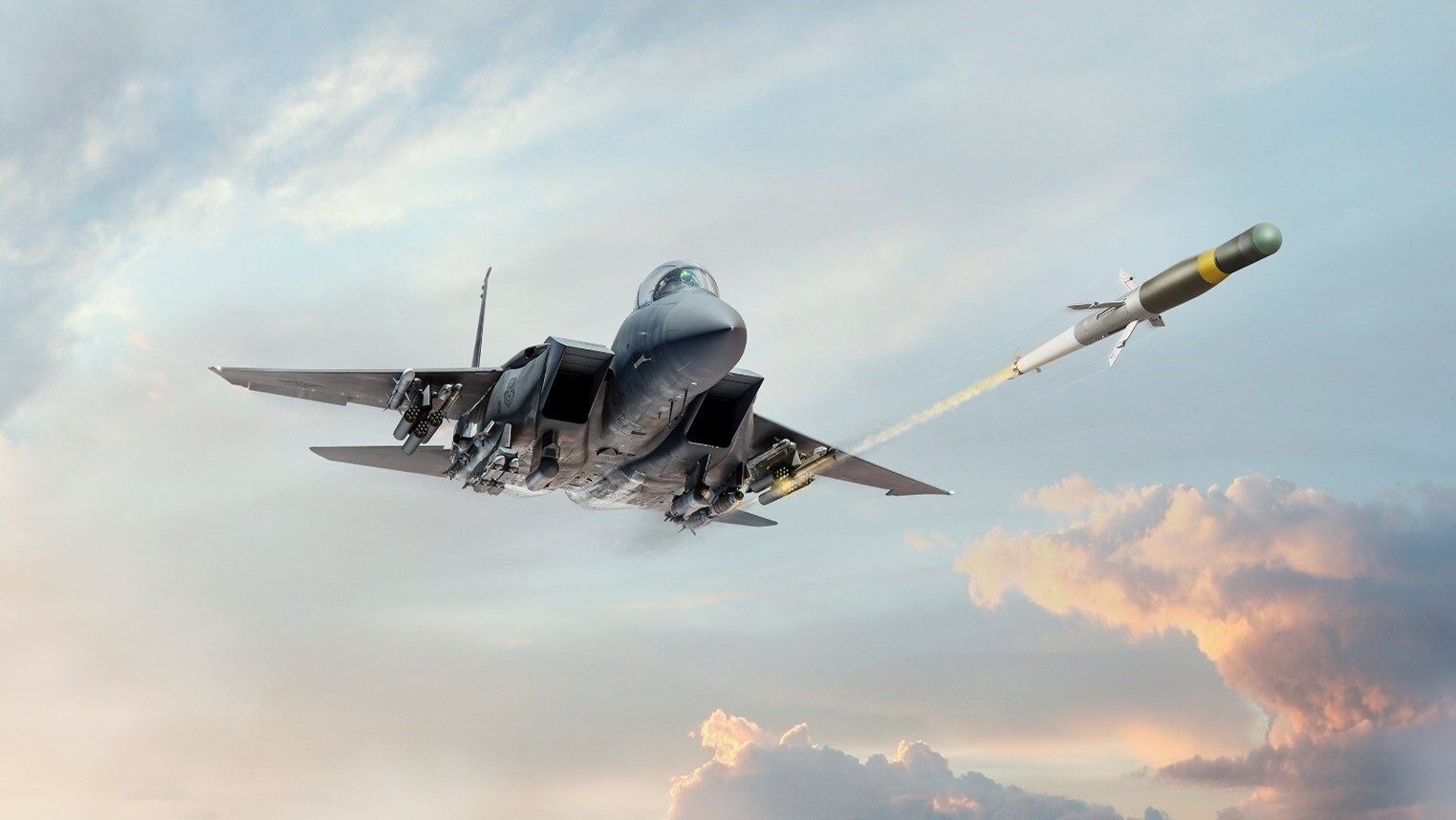
Source: US Air Force


FI INISGHT: CONGRESS RELEASES FY26 DEFENSE APPROPRIATIONS BILL
Thursday, January 23, 2025

Source: US Air Force


SANDY HOOK - U.S. lawmakers released an FY26 defense appropriations bill this week that adds $8.5 billion to the Pentagon's budget, while providing even more funding for new equipment. The legislation is a conference agreement reflecting final negotiations between House and Senate appropriators. The separate National Defense Authorization Act (NDAA) was also in the news recently, but it's the newer defense appropriations bill that ultimately sets the Pentagon's spending levels each fiscal year.

The defense legislation is part of a broader consolidated spending bill that also contains funding for Homeland; Labor, Health and Human Services, Education; and Transportation, Housing and Urban Development.

The defense portion of the bill provides $839.2 billion for the Pentagon, which excludes military construction funded separately. The legislation leans heavily into the Pentagon's acquisition portfolio, adding a total of $18 billion for the development and procurement of equipment. The added funding is split between $14.4 billion for procurement and $3 billion for research and development. The resources reflect increased investment in big ticket items like aircraft, missiles, and ships, as well as a broad range of technologies in other markets like unmanned aerial systems (UAS), counter-UAS capabilities, artificial intelligence, cybersecurity, and advanced materials and weapons development.

Several notable changes in the bill include reversing the Air Force's move to terminate Boeing's E-7 Wedgetail, adding nearly $900 million for the Navy's F/A-XX fighter after the program was deprioritized in the FY26 request, and inserting funding to support the Army's Improved Turbine Engine Program (ITEP) that was scaled back during the Army's recent transformation efforts.

Read below for some key takeaways outlined by lawmakers in a summary of the defense legislation:

PROCUREMENT

Provides $167.5 billion for procurement to the military services and other Department of Defense entities.

AIRCRAFT

- $7.6 billion for 47 F-35 fighters, and an additional $440 million for F-35 and F135 spare parts. - $1.9 billion for B-21 Raider. - $1.9 billion for up to 14 CH-53K heavy transport helicopters. - $1.1 billion for three E-2D Advanced Hawkeye aircraft. - $976 million for six C-130Js for the Air National Guard. - $500 million for four KC-130Js for the Navy Reserve. - $387.7 million for three MQ-25 Stingray unmanned carrier-based aircraft. - $913 million for UH/HH-60M Army Blackhawk helicopters, and an additional $65 million for advanced procurement. - $629 million for CH-47F Block II Chinook helicopters, and an additional $61 million for advanced procurement. - $474 million for two Compass Call aircraft. - $240 million for MQ-1C Gray Eagle 25M aircraft for the Army National Guard. - $362 million for AH-64 Apache Block IIIA remanufacture.

SHIPBUILDING

- $27.2 billion for 17 ships, including seven battle force ships, to include one Columbia-class ballistic missile submarine, two Virginia-class fast attack submarines, three Medium Landing Ships, and one TAGOS SURTASS ship for anti-submarine warfare. - $1.5 billion for the Maritime Industrial Base to invest in critical areas including supplier capacity and capability, strategic outsourcing, workforce training, and technology and infrastructure. - $800 million for three Medium Landing Ships to expedite fielding and delivery of capability to the Marine Corps. - $242 million for long lead items for FF(X) Frigate program in support of the Navy’s objective of quickly delivering a small surface combatant to the Fleet. - $320 million for two Ship-to-Shore Connectors.

VEHICLES AND FORCE PROTECTION

- $780 million for 105 Amphibious Combat Vehicles for the Marine Corps. - $715 million for M109A7 Paladin Self-Propelled Howitzers and M992A3 Field Artillery Ammunition Support vehicles. - $779 million to upgrade Abrams tanks to the M1A2 (SEP)v3 tank variant. - $345 million for Joint Light Tactical Vehicles for the Army. - $359 million for the Next Generation Squad Weapon (NGSW), and $426 million for NGSW ammunition.

MUNITIONS

- Multi-year procurement authority for PAC-3, SM-6, THAAD, Tomahawk, LRASM, JASSM, AMRAAM, and SM-3 IB. - $6.4 billion for procurement of critical munitions, including an additional $2.1 billion for increased quantities to execute multi-year procurement ramp. - $500 million for the Solid Rocket Motor Industrial Base to include facilitization, workforce development, supplier base expansion, and qualification of second and third-tier suppliers.

SPACE SYSTEMS

- $2 billion to procure 11 space launch missions under the National Security Space Launch Phase 3 contract. - $528 million to procure two GPS IIIF spacecraft.

The bill also provides $800 million for the National Guard and Reserve Equipment Account, which traditionally added by Congress during the budget process.

RDT&E

Provides $145.9 billion for Research, Development, Test and Evaluation to the military services and other Department of Defense entities.

AIRCRAFT

- $3.9 billion for 6th Generation aircraft, including $972 million for Navy’s Next Generation Fighter FA-XX, and $3 billion for Air Force’s F-47. - $2.7 billion for Air Force’s Long Range Strike Bomber. - $1.1 billion for Air Force E-7 Wedgetail. - $1 billion for Navy’s Take Charge and Move Out mission. - $1.2 billion for Army’s Future Long Range Assault Aircraft (MV-75). - $175 million for the Improved Turbine Engine Program.

SPACE SYSTEMS - $3.8 billion for Missile Warning / Missile Tracking systems. - $2.5 billion in classified space programs to protect and defend United States space assets to ensure the United States has space superiority. - $1.8 billion for jam-resistant and wideband military satellite communications, including assured satellite communications for nuclear command and control.

INNOVATION AND INDUSTRIAL BASE

- $177.4 million for the establishment of a Civil Reserve Manufacturing Network. - $4.5 billion for hypersonic test infrastructure, testing, and weapons systems. - $4.3 billion to allow access for Office of Strategic Capital loans and loan guarantees to scale capacity of critical suppliers. - $429.5 million for the Defense Innovation Unit (DIU). - $400 million for Accelerate the Procurement and Fielding of Innovative Technologies (APFIT), including $75 million for software-only solutions. - $812.1 million for Industrial Base Analysis and Sustainment support. - $326.9 million for bioindustrial manufacturing to advance energetics and mitigate supply chain vulnerabilities. - $321.9 million for Defense Production Act Purchases.

Source: Forecast Internatioanl
Associated URL: https://www.forecastinternational.com
Author: s. McDougall, Defense Analyst 
 
M1E3 Prototype

M1E3 Prototype

Source: US Army


ARMY UNVEILS NEW TANK - FIVE YEARS EARLY
Tuesday, July 21, 2026
M1E3 Prototype

M1E3 Prototype

Source: US Army


DETROIT - Car enthusiasts milling around the floor at the Detroit auto show this week will get the first public glimpse of the Army’s new main battle tank, as the service prepares to roll out its M1A1 Abrams replacement five years ahead of its original timeline.

Rather than wait to field the vehicles until every last sensor and radio is determined, the Army cut the tank’s development time way down by getting the physical vehicle built and allowing the bells and whistles to be installed and upgraded as the technology evolves.

"The way we used to look at all these boxes…we used to take that box and install the computer," Col. Ryan Howell, the Abrams’ project manager, told reporters Wednesday. "Today, it's computer first, and it happens to be hardware second. So the box doesn’t matter."

With that in mind, the Army is putting "the box" into soldiers’ hands to make sure it maneuvers the way a tank platoon needs it to, and to gather feedback on what it needs for communications, weapons, and sensors.

"Rather than focusing on the tank, we focused on all the digital backbone and the software and what it's supposed to do, and then we wrapped a tank around it," said Alex Miller, the Army’s chief technology officer. "So the fact that the hull looks similar is because we figured out a long time ago, that's what armor should look like to be effective."

All of the cameras, the counter-drone systems, the gunnery and so on will evolve based on the best commercially available tech.

"So now Col. Howell and the acquisition team can update our tank in days and weeks on the software side, rather than us taking a year," Miller said.

The vehicle itself is made of commercial parts: a Caterpillar engine, SAPA transmission, and a Roush race car cockpit with embroidered Recaro seats.

It sounds pretty fancy for the Army, but it turns out that using all of these commercial products to build the new tank cut down significantly on the price tag.

"I won't give you the exact dollar figure, but they can produce them at 10-percent the cost-with the embroidery," Howell said of the luxe seating.

The M1E3 is the biggest program yet developed under the Army’s new Continuous Transformation acquisitions model, which eschews exquisite, bespoke systems that take decades to develop and lock the Army into the hardware, software and the company that builds them.

Instead, the Army has ordered four of the prototypes from Roush, who in their partnership with General Dynamics used the existing Abrams specs to build the vehicle’s skeleton. General Dynamics will take the lead on the next round of test vehicles.

"So I think it would be, you know, a vendor comes and says, ‘Hey, I've got something that's better for active protection. There's a better engine, there's a lighter transmission to meet those specs.’ They could, you know, plug in and play in that," Gen. Randy George, the Army’s chief of staff, told reporters.

Those specs include a total weight one-quarter less than today’s 70-plus-ton Abrams. It also has a hybrid-electric engine that sips half the fuel while delivering a top speed of about 40 mph.

"So it doesn't have a fast quarter-mile time, but it can knock out a target at a quarter-mile in about a tenth of a second. You know, shoot an apple off a fence at 3-plus kilometers," George said. "You can kill drones, do the kinds of things that we would expect of a system like that out there, and you could put it anywhere in the world to do that."

The Army has also spent a lot less money than usual before getting it into soldiers’ hands. About $75 million bought the research and deent, the software architecture inside the tank, and the first production models.

The service has asked for more than $700 million in this year’s budget to start expanding the work. It will take a couple years to get enough built to start sending them out to every tank unit, but the Army was originally planning that it wouldn’t even have soldiers testing them until 2031.

With that initial feedback expected to start coming in this summer, officials are comfortable taking the resources they would have spent on finding the perfect sensors and sights and radios before testing and spending it on the back end, to continuously upgrade the M1E3 as soldiers test it in the field.

And George hopes to be able to repeat this success with its forthcoming M2 Bradley replacement.

"It's one of our goals that we're back here next year, and sitting in the same room having the same discussion with an XM-30 that’s down there," he said.

Source: Defense One / Forecast International
Associated URL: https://www.defenseone.com/defense-systems/2026/01/army-unveils-new-tankfive-years-early/410833/
Author: Meghann Myers 
 
M109A7 Paladin Self-Propelled Howitzer

M109A7 Paladin Self-Propelled Howitzer

Source: U.S. Army


BAE SYSTEMS AWARDED $473 MILLION U.S. ARMY CONTRACT FOR 40 M109A7 PALADIN HOWITZERS
Wednesday, January 21, 2026
M109A7 Paladin Self-Propelled Howitzer

M109A7 Paladin Self-Propelled Howitzer

Source: U.S. Army


WASHINGTON, D.C. -- BAE Systems has received a $473 million contract award for the production of 40 additional M109A7 Paladin Self-Propelled Howitzer sets, which includes the M992A3 Carrier Ammunition Tracked ammunition-loading vehicle.

The contract will also provide additional support services, including technical support packages, post-production refurbishment and welding compliance.


NOTICE TO USERS

Warranty: Forecast International makes no guarantees as to the veracity or accuracy of the information provided. It warrants only that the information, which has been obtained from multiple sources, has been researched and screened to the best of the ability of our staff within the limited time constraints. Forecast International encourages all clients to use multiple sources of information and to conduct their own research on source data prior to making important decisions. All URLs listed were active as of the time the information was recorded. Some hyperlinks may have become inactive since the time of publication.

Technical Support: Phone (203)426-0800 e-mail support@forecastinternational.com

Subscription Information: Phone (203)426-0800 or (800)451-4975; FAX (203)426-0223 (USA) or e-mail sales@forecastinternational.com

Aerospace/Defense News Highlights is published by Forecast International, 75 Glen Rd, Suite 302 Sandy Hook, CT 06482 USA. Articles that list Forecast International as the source are Copyrighted © 2026. Reproduction in any form, or transmission by electronic or other means, is prohibited without prior approval from the publisher.

Forecast International welcomes comments and suggestions regarding its material.
Please send any feedback to: info@forecastinternational.com